

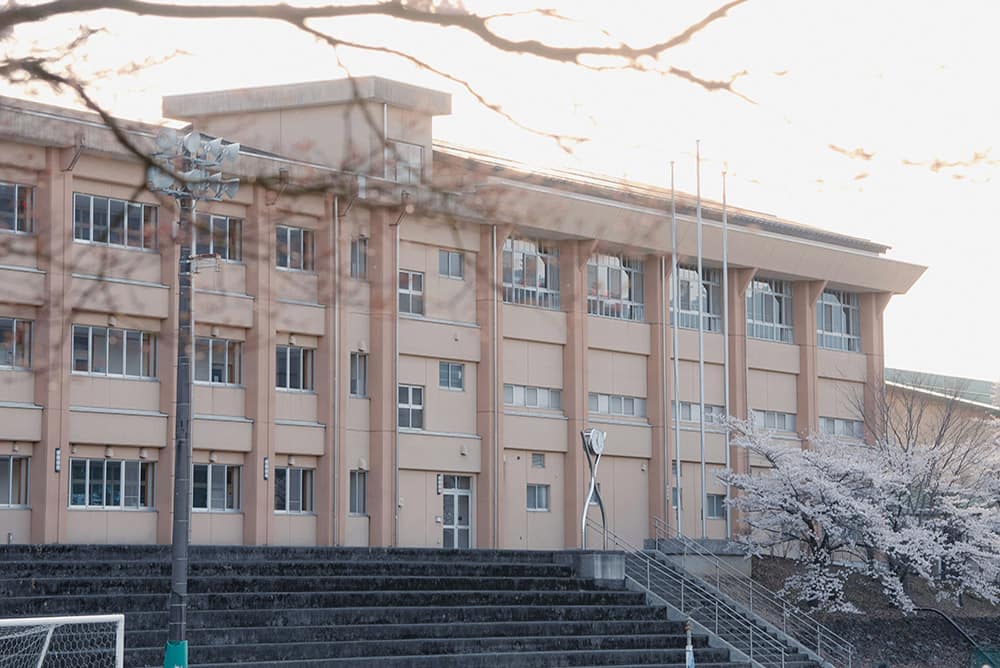
If you ask most people outside Japan to picture a Japanese classroom, many will describe something quite rigid. A uniform, quiet classroom answering very regulated prompts from a caricatured strict teacher. It’s a cultural impression formed by snippets from cinema over the years, and it’s in some ways akin to classrooms of the 1960s or 1970s in the U.S. However, much like classrooms have evolved in the U.S. and across the globe through advancing technologies, evolving teaching methods, and shifting pedagogical approaches, Japanese classrooms are also changing, evolving, and growing.
The push toward a more active, dialogic, collaborative learning environment, and more room for individual students’ diverse needs, has been building for a decade or so in Japan, since before the last curriculum revision. Now, committees in Tokyo are in the final stages of writing the next iteration, and the direction points even further toward deepening an active, collaborative classroom, and giving schools more room to shape class time around students’ different needs. Another significant shift is weaving AI directly into the curriculum itself, both as a tool teachers use in planning lessons and as something students are explicitly taught to use responsibly.
That being said, even now the stereotype of the rigid classroom is not completely unfounded in Japan. Nearly ten years into the original push, many classrooms are still building toward this modern, inclusive, and more active and reactive education model.
Japan’s national curriculum guidelines, the 学習指導要領, get rewritten roughly once a decade, and each revision sets the direction for how every subject, at every grade level, gets taught for years afterward. The current guidelines were phased in between 2020 and 2022, and were built around a phrase that has been repeated in staff rooms ever since: 主体的・対話的で深い学び, something close to “proactive, dialogic, and deep learning.” It asks teachers to move away from simply delivering content and toward creating the conditions for students to engage with what they’re learning actively. The goal is to get students to think critically, talk it through with each other, and connect it to their own thinking or challenge their own preconceived ideas.
MEXT itself has described the idea through three specific lenses for teachers to check their own lessons against: whether students are engaging proactively, developing genuine agency and motivation in their own learning, rather than going through the motions; whether they are deepening their thinking through dialogue with classmates, teachers, and sometimes people outside the school; and whether that process leads somewhere, toward genuinely deeper understanding rather than surface coverage of the content. Stated in this way, none of it sounds unreasonable or unattainable. However, it also is not self-explanatory. Knowing that a lesson should hit all three of those marks is a challenge for teachers and students—one that needs to be addressed collaboratively, and with patience for this evolution to root itself.
2020 was not the first time this transition to a collaborative learning environment began. The Central Council for Education report from 2016 shows that the country has been steering this way for the better part of a decade. In that way, the reform did not emerge from a system in crisis, but as a slow transition from well-steeped traditions to new models of teaching and learning
In 2012, Japanese students posted the highest combined PISA scores among OECD member countries, but those results didn’t tell the full story. Alongside that strength, policymakers were also weighing observations of persistently low motivation to learn and low self-esteem among students who were nonetheless performing well academically. These concerns also stemmed from broader questions about preparing students for a labor market being reshaped by advancing technology and an increasingly connected world. These strong test results paired with a nagging sense that something underneath was not quite right, and that’s part of what pushed the 2016 report toward this direction in the first place.
The next revision cycle is already in its final stages, with a formal report expected sometime later this year. What is on the table right now goes even further, with more of that same active, collaborative learning, more discretion for individual schools to shape class time around their own students’ needs, but now a real effort to build AI into how the curriculum itself is organized and how teachers plan lessons day to day.
One concrete example of what that looks like comes from the proposals, which would add a formal information studies component to elementary school’s integrated learning time, and create an entirely new information and technology subject at the junior high level. These proposals build AI and data literacy directly into the curriculum’s structure from an early age rather than leaving it to a single high school course, as it mostly is today.
None of these changes are happening in isolation, either. The same years that have carried this policy push have also seen sustained, well-funded investment in getting a device into every student’s hands and keeping it up-to-date. A government-backed renewal fund set up a few years ago has been replacing the majority of the original one-device-per-student hardware, with continued budget carried into the next fiscal year to finish the job. The goal is for the infrastructure of a more active, digitally supported classroom being built alongside the pedagogy, rather than after it.
All of this is public record. It has been debated in committee for two years, and it will shape what Japanese classrooms are expected to look like well into the 2030s, at least on paper.
The other biggest hurdle in this change of perception is that a clear policy direction and a changed classroom are not the same thing. And, the distance between them has turned out to be longer than anyone probably hoped for back in 2017.
I have often heard from educators that they feel lost on what dialogic learning is actually supposed to look like, sound like, and feel like in a classroom—something distinct from deep learning—and the research backs up what I’ve been hearing. Surveyed on what “dialogic” learning looks like compared to “deep” learning, many teachers, regardless of how long they had been in the classroom, could not reliably tell the two apart in practice. I do not think that reflects on the teachers at all. It is a sign of how hard it is to turn a phrase like “proactive, dialogic, and deep learning,” however clearly it is defined on paper, into something you actually do differently on a Tuesday morning, especially when most of your own training, and the materials you were handed, were built around a different model of teaching entirely.
The gap shows up in smaller, more granular ways too. In one documented case, a school administering a needs assessment survey to its own teaching staff found that confidence was lowest in exactly two areas: using ICT specifically to support active, dialogic, deep learning, and teaching students the structures and etiquette of ICT use in the first place. Breaking that down, this is the ordinary, practical layer underneath the policy language, and apparently still among the harder parts to get right, years into the push. But efforts are being made. As recently as the past couple of years, large scale training efforts have been running, specifically to build the collaborative and problem solving skills teachers need to deliver on this direction, in some cases through formal partnerships between outside training organizations and municipal boards of education.
Nearly ten years in, this is still being actively built. Shifting how an entire national teaching corps works day to day is a genuinely large undertaking; not landing yet is a different thing from not landing at all. What that timeline mostly tells you is how much sustained, specific support a change like this actually requires, not that the change itself is out of reach.
I do not read that as a story about reluctance. It is the ordinary pull of what is familiar. Whole-class, teacher-led instruction is a craft Japanese teachers have refined over a long time, built around a specific rhythm: sequencing material carefully, guiding the whole room through it together, checking understanding as a group before moving on. Evolving that embedded structure is a genuinely hard thing to ask of anyone, however clear the policy direction.
Zooming out, a gap this persistent, despite clear direction from the top, real funding behind the infrastructure piece specifically, and teachers making a genuine effort, does not close through policy language alone. It closes through practical support: something that helps a teacher move from what they already know into what the new guidelines are asking for, one class period at a time.
That is not really the conversation happening among companies weighing whether to bring their programs into Japan, though. Instead, I keep hearing a version of the same reasoning: we have got real traction in several other markets without doing much localizing; translation is fast and accurate now thanks to AI; and we are still not seeing traction in Japan compared to those markets, so Japan just seems like the complicated one, maybe not worth the effort right now.
Translation really has changed. What used to require a team of translators and weeks of turnaround, AI now handles quickly and often well. But classroom culture and teaching practice were always a separate question from the words used to describe them, and accurate translation was never really the layer that determined whether a program worked in a Japanese classroom. If translation quality had genuinely been the barrier, closing that gap should have shown up as movement, more uptake, more engagement, some sign the barrier had eased. It has not. The traction picture in Japan looks much the same as it did before AI translation became this good.
Language was never really the barrier, and there is a good way to check that. The same shift is difficult even where there is no foreign program involved at all, no translation to get right, and full institutional backing, with the country’s own ministry directing its own teachers, in their own language, for the better part of a decade. That is not a second, harder problem hiding underneath the first one, but the ordinary, well-documented difficulty of moving any classroom toward a genuinely different kind of learning. It’s the same difficulty large education systems everywhere run into, not something uniquely resistant about Japan.
“Japan is a hard market” is vague enough to justify walking away from. “Teachers need concrete, classroom-level support translating this direction into daily practice” is specific enough to actually try and solve, and it already points toward where that support would need to go, the same gap the research earlier in this piece found: teachers being able to tell “dialogic” and “deep” learning apart in their own lesson planning. Those are very different problems to be facing, even if the first one sounds worse.
Which means traction collected in other markets is really only telling you one thing: how well a design’s assumptions happened to match the classrooms it was tried in. A fit that exists today because assumptions happened to overlap is not the same as one that was tested and built to last. And a market that has not shown that same fit is not necessarily closed off either, only untested in the way traction usually gets read.
Close to nine million elementary and junior high students are being taught right now inside a system that is actively, deliberately moving in this direction, backed by funding and a decade of sustained institutional commitment, not a pilot program or a trend that might fade. Put plainly, whatever a company decides about Japan, it is deciding about something moving toward exactly the kind of learning many of these programs were already built for, not something standing still.
I do not think there is a tidy conclusion here, and I would rather not pretend there is one. Japan’s own teachers are still finding this shift hard, years into a clear and well-funded push toward it. That is not a reason to assume anything, in either direction, about what a specific program’s fit looks like, or what a market’s readiness looks like.
But I think it does change the question worth asking. The real question is not whether Japan has traction yet, but whether anything introduced so far, homegrown or imported, has actually made this shift easier to live inside a classroom, or has simply asked teachers to brave the changes alone.
Tomoya Tsutsumi has spent over two decades working at the intersection of Western and Japanese K-12 education, serving as a classroom teacher, a learning program leader at Apple, and the Founder of Unfold Learning Design. His perspectives are grounded in authentic classroom experience and a profound understanding of the elements that make learning effective across cultures.
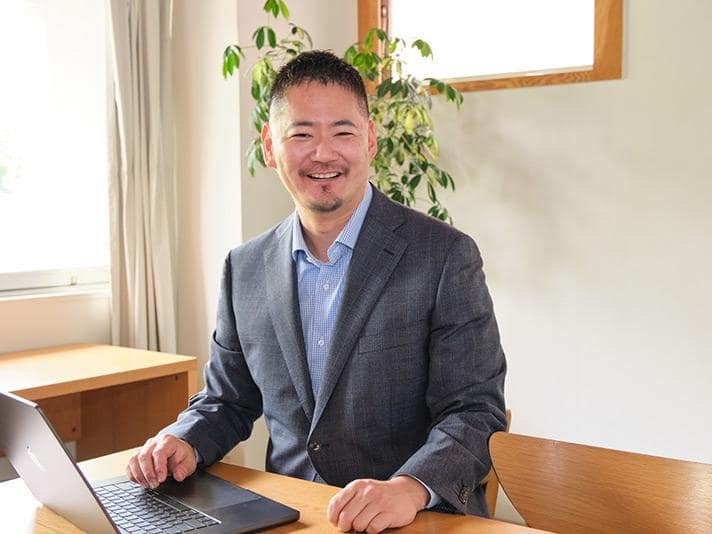
Tomoya Tsutsumi
Founder & Education Integration Designer