


Across four years leading a global professional learning program for Japanese educators, my role spanned strategy, content development, and partnerships nationwide. But one thread ran through almost everything I touched: translating programs and training the facilitators who delivered them to educators nationwide. Program after program, I watched the same pattern along that thread. The training would go out as designed, and what came back — through the facilitators, and in the feedback from educators who’d sat through it — was rarely “this worked.” It was something closer to confusion. Each time, I raised it. Each time, the answer was the same: keep it consistent, don’t adjust the content, just translate.
By the time one of the largest programs I led came across my desk, I already knew roughly how it would go. That program was also the one that frustrated me most, because the stakes were higher and the room to act on what I already knew was just as small. Don’t get me wrong, the program itself was excellent. Strong content, real research behind it, and a strong track record in other markets.
As I worked through the translation, that same feeling came back, sharper this time. The scenarios assumed classrooms that didn’t quite look like Japanese classrooms. The activities assumed a kind of in-the-moment, speak-before-you’re-sure participation that nobody had trained these educators for. I raised it again. The answer, again, was the one I’d come to expect from a global brand: maintain consistency, don’t touch the content.
So the rollout went ahead as designed. We trained the facilitators. We piloted it with educators across the country. And it landed…about as well as I’d feared. “This is hard to follow.” “We don’t know how to use this.” “It doesn’t fit how we teach.” I heard it all from the participants. I heard it all from the facilitators who’d just delivered the training and watched it not work.
Failure is a great teacher, though, and by then I’d been making this same case for years. After that pilot, the concerns I’d been raising all along were finally hard to wave away, and I got room to make real changes to that particular program — not just to the words, but to how it was built for the rooms it was entering. But that was one program, fixed once, after years of saying the same thing. For most of the others, the pattern simply continued: translate, adjust, translate again, tweak the wording, translate once more. While global program consistency had to be maintained, a reasonable position was nonetheless taken that left the layer underneath the language untouched. The pedagogical layer.
That experience shaped everything I now do. What I kept seeing — across programs, across organizations, across contexts — was the same fundamental gap: the assumption that a great program, accurately translated, will work. But, unfortunately, it doesn’t. And that’s not because the program lacks quality, but because educational programs don’t just carry content for teachers. They carry an entire set of assumptions about how teaching and learning happen, and those assumptions, I’ve discovered, don’t always travel well.
When people talk about the limits of translation, the conversation usually lands on cultural nuance – idioms that don’t transfer, examples that don’t resonate locally, humor that falls flat. These are real issues, but they’re also the most visible ones and, in many ways, the easiest to fix. The deeper problems sit underneath the language entirely.
The first is what I think of as the invisible social contract of a classroom activity. Go back to that instruction: “discuss this with your group.” In a Western classroom, that sentence comes loaded with shared understanding: it’s acceptable to speak before you have a fully formed answer, silence means the group needs a prompt, disagreement is part of the process, and being wrong in front of others is not a serious social risk. None of that is written anywhere. It doesn’t need to be, because it’s absorbed through years of being in classrooms where those norms operate.
That invisible contract is exactly what failed in the classroom where this story began. Translate that same sentence into Japanese and deliver it in a Japanese school, and the words are accurate, but the social contract doesn’t transfer. Students may wait for someone else to begin. Teachers may feel the activity is failing because the room goes quiet. The program gets labelled as “not suited to Japanese learners,” when the real issue is that the activity was designed with an entirely different classroom culture in mind.
The second problem is the false equivalence of shared vocabulary. Many core educational concepts appear in both English and Japanese. Inquiry. Reflection. Student agency. Independent thinking. These words exist in both languages, translate cleanly on paper, and seem to promise alignment. They often don’t deliver it.
Take “reflection” as an example. In English-speaking educational contexts, particularly those influenced by North American or British progressive pedagogy, reflection is understood as a metacognitive practice: learners examine their own thinking process, consider what shifted in their understanding, and articulate how they will approach learning differently as a result. It is as much about emotional and intellectual self-awareness as it is about content review.
In many Japanese classrooms, the equivalent practice – 振り返り (furikaeri) – typically means reviewing what was covered in the lesson, consolidating understanding, and confirming learning objectives were met. It is a legitimate and effective practice, but it is a different practice. Neither is wrong. But a program built around one definition of reflection, delivered to teachers operating with the other, will produce confusion about what students are actually supposed to be doing, and why.
The third problem is the most fundamental, and it has nothing to do with the quality of the translation itself. Even the most skilled translator cannot make the judgement calls that this kind of work requires, because those judgements require something translation does not: deep, practical familiarity with how learning actually happens inside the classrooms of both cultures.
Recognizing that a particular facilitation approach will create unproductive friction in a Japanese school context, or that an activity structure assumes a level of spontaneous student participation that needs to be carefully scaffolded, knowing how a curriculum framework maps onto or conflicts with Japan’s learning standards. These are less-so linguistic judgements and more-so pedagogical layers to be addressed. They come from sustained, firsthand engagement with classrooms on both sides of the cultural divide.
Of all the contextual factors that affect how programs land in Japanese schools, the one most consistently underestimated by organizations coming from English-speaking markets is the role of whole-class, teacher-led instruction.
In Japan, the predominant model of classroom delivery involves the teacher carefully sequencing learning, building understanding step by step, and guiding the class as a whole through material in a structured progression. This is not simply a stylistic preference. It is built into how lesson time is allocated, how curriculum materials are designed, how teacher expertise is defined and developed, and how learning outcomes are assessed. Teachers who are highly skilled within this model have developed a specific and sophisticated professional craft around it.
In the OECD’s most recent PISA assessment, Japanese 15-year-olds ranked first among OECD countries in both mathematics and science, and Japan’s average scores rose across all three tested domains even as the OECD average fell. Generally, whole-class, teacher-led instruction and the more facilitator-driven, inquiry-based approaches common in English-speaking markets cultivate different strengths, but Japan’s PISA results reflect real strength in deep, structured mastery. However, facilitator-driven approaches tend to build something else: comfort with ambiguity and practice applying knowledge in open-ended, less predictable situations – competencies increasingly described as ’21st century skills.’ Taken together, there is room for each system to extend further into what the other already does well.
Programs developed in English-speaking markets draw on a wide range of approaches – inquiry-based learning, project-based learning, student-centered design, differentiated instruction, and others – each built on its own set of assumptions about how teaching and learning should happen. Many of these frameworks position the teacher primarily as a facilitator: someone who creates the conditions for students to generate questions, work through uncertainty, construct meaning collaboratively, and take visible ownership of their learning process. These are strong, well-researched approaches. But they ask teachers and students who are unfamiliar with these norms – in Japan or any market where these approaches didn’t originate – to operate in ways that may feel unfamiliar given their own norms and professional reality.
When these programs arrive in Japanese schools without adequate bridging, the teachers who receive them are not being resistant or inflexible. They are encountering a program whose underlying logic does not yet connect to the educational environment they work within. The result is almost always the same: the program is introduced, used superficially or inconsistently for a period, and then quietly set aside. The materials end up on a shelf, and the opportunity is lost on both sides.
Translation works at the level of language. Standard localization works at the level of content – swapping examples, adjusting references, making the material feel locally familiar. But neither touches the layer that actually determines whether a program works in a classroom: the pedagogy. How teaching is structured. How learning is expected to happen. What teachers and students are each assumed to do, and why.
In 2026, translation has never been more accessible, largely due to advances in AI. Most programs entering Japan today are linguistically accurate from day one. And yet, programs still stall at the classroom door. The pedagogical layer remains untouched.
Adapting at that layer – preserving a program’s original intent while carefully redesigning how its pedagogy is delivered in a new context – is what ULD calls Pedagogical Localization. Pedagogy, in simple terms, is the how of teaching: not what is being taught, but the craft and reasoning behind how it is taught. Localizing at that level is a fundamentally different undertaking from anything that happens in a translation brief.
Importantly, Pedagogical Localization is not about redesigning a program to simply conform to existing classroom norms. That approach would preserve the surface of the original program while gradually hollowing out its intent.Instead, it is about building a bridge: introducing scaffolding and bridging activities that meet teachers and students where they are, while gradually creating the conditions for them to work toward the program’s core pedagogy. The goal is a supported pathway – one where teachers develop genuine confidence with new approaches, where students are eased into different kinds of participation, and where the program’s original intent and goals are ultimately realized, not approximated.
The timing matters here, too. Japan’s own National Curriculum Standards, phased in across all school levels between 2020 and 2022, now call for “independent, interactive, and deep learning” in every subject. In other words, Japanese schools are already moving deliberately, and on their own terms, toward many of the approaches that international programs embody. A well-built bridge doesn’t ask anyone to cross alone; it meets that movement partway.
This means asking careful questions before touching any content. What teaching and learning assumptions is this program built on? Where do those assumptions connect naturally to Japanese classroom practice, and where do they create friction? What scaffolding would help teachers and students move toward the program’s intended pedagogy at a pace that feels sustainable? How does it align with curriculum standards and assessment frameworks? What do teachers need to feel genuinely supported – not just technically trained?
These are design questions, and answering them well requires sustained, practical knowledge of both educational contexts.
Across more than fifteen years in Canadian K-12 classrooms, I taught across a wide range of pedagogical approaches – from inquiry-based and project-based learning to differentiated instruction, inclusive classroom design, and beyond. I know what these programs look like when they are working, because I have implemented them as a practitioner: the conditions that make them possible, the ways they can fall apart, and what they are genuinely trying to do at the level of a learner’s experience.
Along the way, I also found that some Japanese teaching concepts and practices were simply better suited to certain kinds of learning than what I was already doing. I sought those out – through books, online research, and exploring different approaches – brought them into my Canadian classroom, and they made a difference for my students. That experience is part of why I approach Pedagogical Localization the way I do – as a genuine exchange between two systems, each with real strengths.
Through those same four years in leading professional learning programs for Japanese educators on that global technology company’s worldwide education team – working closely with teachers and learners inside schools across the country, engaging with curriculum contexts, and observing how programs are actually received and used – I developed a grounded understanding of Japanese educational settings that goes well beyond what any external analysis can provide.
That combination – deep practitioner knowledge of a wide range of pedagogical approaches as they are meant to function, and firsthand engagement with the realities of Japanese educational culture – is what makes it possible to build meaningful bridges between them. By moving beyond simple translation to address those pedagogical layers, we can identify where a program’s intent connects or still requires careful scaffolding, and, perhaps most importantly, how to create the conditions for real learning and engagement to take root over time.
In all honesty, the field does not need new programs, and ULD doesn’t develop them. What it needs – what we focus on – is the work of ensuring existing programs actually function in the classrooms where they are being introduced.
The best educational programs have a simple goal: to help students learn something they could not learn as well before. These are good, solid programs with great funding. Japan’s EdTech market alone reached US$14.8 billion in 2024 and is projected to more than quintuple by 2033 – and that’s before accounting for textbooks, curricula, and learning programs delivered through educational publishers and curriculum developers. More programs are entering Japanese schools, through more channels, than ever before. But, every one of them will face the same gap. Will the programs translate? Will they work? Will learning actually happen?
The programs that work won’t be the best-designed ones, but those that intentionally bridge the pedagogical gap. The learning has to meet students, teachers, and schools where they are – working with the classroom norms and expectations they already carry, not against them. The most effective programs will be those that build genuine capacity in the people using them: capacity that grows over time, that transfers to other contexts, and that makes the program’s original pedagogical vision increasingly achievable.
Interested in working with an educational consultancy that understands both sides of the classroom? Reach out to Unfold Learning Design to start the conversation.
Tomoya Tsutsumi has spent over two decades working at the intersection of Western and Japanese K-12 education, serving as a classroom teacher, a learning program leader at Apple, and the Founder of Unfold Learning Design. His perspectives are grounded in authentic classroom experience and a profound understanding of the elements that make learning effective across cultures.
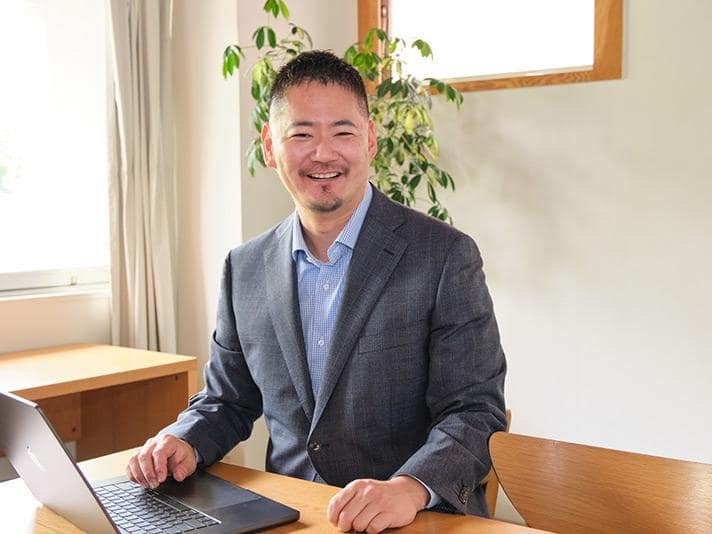
Tomoya Tsutsumi
Founder & Education Integration Designer